
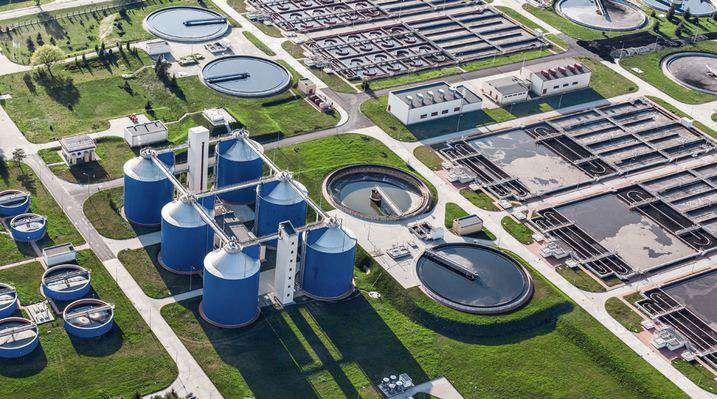

Biogas plant investment cost in India is the first number every serious investor wants — and the hardest one to pin down. A household unit can be built for under a lakh; a commercial Compressed Biogas (CBG) plant under the Government of India's SATAT scheme can run into tens of crores. The honest answer depends on your capacity, feedstock, site, technology route, and delivery model. This guide breaks down every cost component, the subsidies that reduce your effective outlay, and the return timelines you should plan around before committing capital.
What Determines Biogas Plant Investment Cost in India?
Biogas plant investment cost in India is not a fixed number. It moves with plant scale, feedstock type, purification requirements, and site conditions. A biogas plant converts organic waste — cattle dung, agricultural residue, food and municipal organics — into gas through anaerobic digestion. When that gas is purified and compressed into CBG (Compressed Biogas) or BioCNG, it becomes chemically identical to CNG and can be sold to fuel stations, industries, or CGD (City Gas Distribution) networks — which is where the investment case gets significantly larger.
- Plant capacity — measured in cubic metres (m³) for household units, or tonnes per day (TPD) feedstock input for commercial CBG plants.
- Feedstock type — cattle dung, poultry waste, crop residue, or municipal solid waste each need different digestion technology.
- Purification and compression — required only once you move from raw biogas to sellable CBG.
- Land, civil works and location — a major cost driver beyond household scale.
- Delivery model — EPCM vs LSTK contracting affects both budget and risk exposure.

The right way to budget a biogas plant investment is to size the plant to your feedstock — not to size your feedstock ambitions to a plant you have already decided to build.
Household Biogas Plant Investment Cost
At the smallest end of the scale, a household plant is a low-cost, low-risk entry point into biogas. Pricing depends mainly on design and capacity rather than location.
- Portable flexi-bag digester: ₹15,000–₹30,000 — the cheapest option, since it skips underground masonry work.
- Deenbandhu design (1–2 m³): ₹25,000–₹50,000, covering excavation, masonry, the gas holder dome, and piping to the kitchen stove.
- Mid-size plant (3–4 m³): ₹50,000–₹90,000, suited to larger families or households with more cattle.
- KVIC floating-dome plant: typically 30–45% more than an equivalent Deenbandhu plant, owing to the steel or FRP drum.
These figures are before any government subsidy — see the subsidy section below for how much this comes down for eligible rural households.
Commercial and Farm-Scale Biogas Plant Investment Cost
Industrial biogas projects can require investments ranging from ₹50 lakh to ₹50 crore depending on project scale and equipment. A real-world reference point: a dairy farmer running a 40-cattle operation installed a 25 m³ commercial plant with MNRE scheme support and a NABARD loan, bringing his total investment after subsidy to around ₹4.5 lakh — the plant went on to supply gas to 12 neighbouring households and generate additional income from bio-slurry sales to local farmers.
Cost Factors at Farm and Commercial Scale
- Plant capacity and digester volume
- Feedstock collection and storage infrastructure
- Slurry and manure handling systems
- Optional gas storage or generator attachments
CBG (Compressed Biogas) Plant Investment Cost
CBG plants — which purify and compress raw biogas to CNG-equivalent quality — sit at the top of the investment scale. A commercially ready CBG project must budget for land development, civil works, feedstock handling, digesters, gas purification, compression, utilities, statutory compliance, evacuation, digestate management and working capital, so a single flat "₹ per TPD" figure is not a dependable planning number.
Civil & Structural Works
Typically 25–35% of total cost. Covers digester construction, gas holder, feed reception area, slurry handling, digestate storage, plant roads and utility infrastructure.
Equipment & Machinery
Typically 35–45% of total cost. Includes feed pretreatment, digester and mixing equipment, gas handling, H₂S scrubbing, gas upgrading, compression and dispensing systems.
Engineering & Compliance
Typically 8–12% of total cost. Covers process design, statutory approvals, environmental clearances and quality systems — often underestimated by first-time investors.
Working Capital & Commissioning
Typically 5–8% of total cost. Covers feedstock for biological start-up, utilities during commissioning, and operator training.
For scale context: Hindustan Petroleum Corporation Ltd has announced plans to invest ₹20,000 crore over 2–3 years to set up 24 CBG plants across India, with each facility designed to produce 10–15 tonnes of CBG daily from organic waste.
Government Subsidies That Reduce Your Effective Investment
India's policy support materially lowers the net biogas plant investment cost, whether you are building a household unit or a commercial CBG plant.
- The Ministry of New and Renewable Energy (MNRE) provides central financial assistance covering 15–20% of a project's capital cost.
- Central Financial Assistance of up to ₹4 crore per 4.8 TPD CBG capacity is currently available, with the Indian Biogas Association proposing to raise this to ₹6 crore.
- The GOBARdhan Yojana supports family-size biogas units, with financial assistance reported around ₹37,000 per unit in several state implementations.
- A marketing development assistance of ₹1.50 per kilogram is offered to promote organic fertiliser, a key byproduct of biogas plants.
Subsidy amounts vary by state and scheme, so confirm current eligibility with your local Krishi Vigyan Kendra, district rural development office, or the relevant Oil Marketing Company before finalising your project budget. Talk to our team about subsidy-eligible project structuring.
Return on Investment — How Long Until It Pays Off?
Domestic biogas plants typically recover their investment within 2–4 years through reduced LPG usage and organic fertiliser production. Commercial and CBG-scale biogas plants typically see a 3–5 year ROI period, driven by CBG sales, digestate revenue, and — where applicable — carbon credits. Actual payback depends on feedstock cost, financing structure, and operational efficiency, and should always be modelled against site-specific data rather than a national average.
Delivery Model Also Affects Your Investment Risk
The choice between owner-managed EPCM and single-point LSTK contracting affects both your total project budget and your risk exposure. EPCM gives owners cost visibility and procurement savings; LSTK transfers execution risk to the contractor at a fixed price. Compare EPCM and LSTK contract models in detail.
Why Invest Now: Market Momentum in 2026
- India's biogas sector is expected to attract over ₹5,000 crore in investment during FY 2026-27, according to the Indian Biogas Association.
- 94 compressed biogas plants sold more than 31,400 tonnes of CBG during FY 2024-25, reflecting strong and growing market uptake.
- India's CBG blending obligation alone is expected to catalyse around ₹37,500 crore in investment and roughly 750 new CBG projects by 2028-29.
- CBG plants qualify for priority sector lending from banks at concessional interest rates.
Policy support, assured offtake under SATAT, and a growing feedstock base make this one of the strongest windows for biogas investment India has seen. See our project portfolio for real delivery examples across feedstock types and geographies.
Get an accurate number before you commit capital.
Biogas plant investment cost in India spans a wide range — from ₹25,000 for a household unit to tens of crores for a commercial CBG facility. What stays constant is the value of a feedstock-first, site-specific feasibility study before any capacity or budget is frozen. Share your feedstock, site and offtake context with Tridanta, and our engineering team will respond with a feasibility-first perspective grounded in real project data. Discuss Your Project with Tridanta →
Frequently Asked Questions
What is the minimum investment to start a biogas plant in India?
A small household biogas plant using a portable flexi-bag digester can start from roughly ₹15,000–₹30,000, before any subsidy.
How much does a commercial biogas plant cost in India?
Commercial and industrial biogas plants typically cost between ₹50 lakh and ₹50 crore, depending on capacity, feedstock, and purification technology.
Does the government subsidise biogas plant investment?
Yes. MNRE covers 15–20% of capital cost on eligible projects, and CBG plants can receive central financial assistance of up to ₹4 crore per 4.8 TPD capacity.
How long does it take to recover a biogas plant investment?
Household plants typically break even in 2–4 years; commercial and CBG plants usually recover their investment in 3–5 years, depending on feedstock cost and operational efficiency.
What is the difference between a biogas plant and a CBG plant?
A basic biogas plant produces raw gas for cooking or power. A CBG plant adds purification and compression to produce CNG-equivalent fuel that can be sold commercially or fed into vehicles and CGD networks.

